Article: Dental Equipment Guide: What Your Practice Needs (and How to Choose It)
Dental Equipment Guide: What Your Practice Needs (and How to Choose It)
Buying dental equipment usually means making a long list of decisions at once, whether you're opening a new office, adding an operatory, or replacing a chair that has been in service for fifteen years. The equipment you choose tends to shape how your team moves through the day, how comfortable patients feel in the chair, and what your service bills look like a few years later.
We talk with dentists and office managers every week who are somewhere in that process. This guide follows the order most practices think about equipment in, starting with the operatory and moving through imaging, handpieces, sterilization, and the utility room. After that, we cover planning and budgeting, and answer the questions we hear most often.
Why the right dental equipment matters for your practice
A dental office works a bit like a restaurant kitchen. The team can be excellent, but if the stove runs cold, the whole dinner service slows down. In a dental office, chairs, suction, handpieces, and sterilizers all run at the same time, so a problem with one of them usually shows up as delays somewhere else on the schedule.
In practical terms, equipment choices tend to affect:
- Appointment length, since well-placed instruments, steady suction, and fast image capture can each save a few minutes per patient.
- Patient comfort and case acceptance, because patients often notice a supportive chair or a quiet handpiece, and seeing an intraoral image on screen can make treatment conversations easier.
- Your team's physical health, as dentists and hygienists spend years in the same postures, and chair height, stool design, and lighting can make a noticeable difference by the end of the week.
- Compliance, since sterilization, waterline, and amalgam equipment is tied directly to CDC guidance, EPA rules, and state dental board requirements.
- Long-term cost, including parts, service, and how early a unit needs replacing.
Generally speaking, this doesn't mean every office needs the top model in every category. We think it usually means matching each piece of equipment to how your practice runs day to day, e.g. your procedure mix, patient volume, room layout, growth plans, etc.
Dental chairs and operatory units
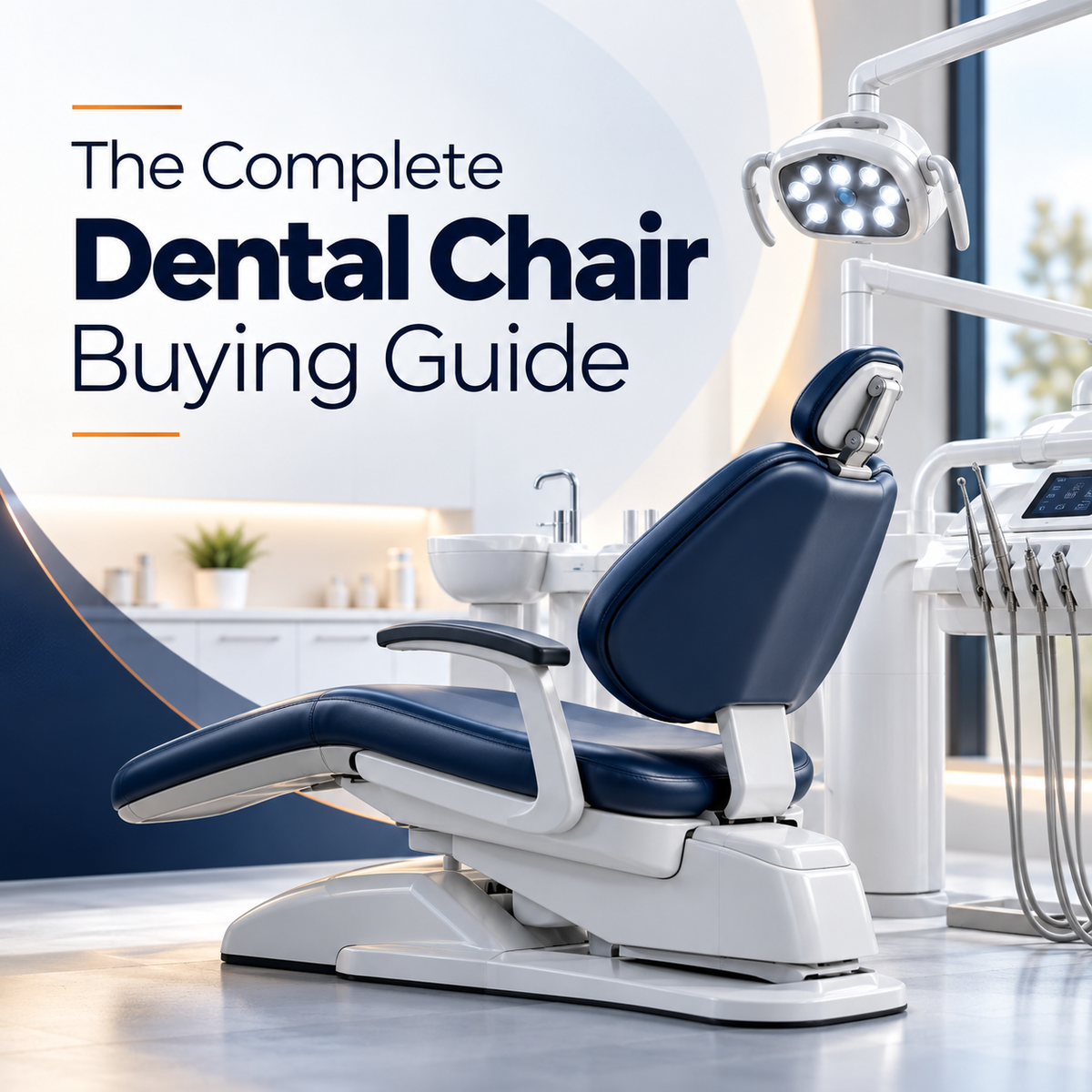
The dental chair is the piece of equipment patients spend the most time in, and the one your clinical team works around all day. It's also usually one part of a larger system, the operatory unit, which includes the delivery unit, operatory light, assistant's instrumentation, stools, and the connections to air, water, and vacuum.
What makes up a dental operatory
A fully equipped operatory usually has:
- The patient chair, including the base, lift mechanism, backrest, headrest, and upholstery.
- The delivery unit, which holds the handpiece tubing and air/water syringe, and often the handpiece speed and water controls.
- The assistant's instrumentation, usually the high-volume evacuator (HVE), saliva ejector, and a second syringe.
- The operatory light, which is almost always LED in new setups.
- Doctor and assistant stools.
- The foot control, which runs the handpieces and sometimes repositions the chair.
- Optional add-ons like a cuspidor, monitor mount, intraoral camera holder, curing light, etc.
You can buy these pieces separately, but many offices find it simpler to buy a dental chair package, where the chair, delivery unit, light, and assistant's side are designed to work together. Packages can reduce compatibility questions and often cost less than buying each component on its own. We currently carry more than 35 operatory packages (including the Helix, Northwest, Columbia, and Sierra packages), along with individual dental chairs from ADS and BDS.
Hydraulic vs. electromechanical dental chairs
The lift mechanism is one of the first technical choices you'll run into.
Hydraulic chairs use a pump and fluid to raise and lower the chair. They tend to move smoothly and are often very durable. The trade-off is that they can need periodic fluid checks, and a leak (while uncommon) can make a mess of the floor.
Electromechanical chairs, like the ADS AJ12 Electromechanical Dental Chair, use electric motors and mechanical actuators. They're usually quieter, need less routine maintenance, and don't carry the risk of a fluid leak. Some clinicians feel the movement is slightly less smooth, though newer designs have narrowed that gap quite a bit.
Both types can work well. If your office already has a service technician who knows one type, we think that's a reasonable tiebreaker.
Choosing a delivery unit
The delivery unit decides where the instruments sit, and it probably affects day-to-day workflow more than any other operatory choice. Delivery units generally come in four styles:
- Over-the-patient delivery. Instruments sit on an arm that swings over the patient's chest. This setup is common in general dentistry because both the dentist and assistant can reach the instruments, and many models work for right- and left-handed clinicians. Some patients find the arm over them a little uncomfortable.
- Rear delivery. Instruments sit behind the patient's head, out of their line of sight. This can help anxious patients stay calm and is common in pediatric and ortho offices, but it usually relies more on a trained assistant passing instruments. Rear delivery can be mounted on an arm, a panel, or under a cabinet (the ADS RD-3100 and RD-3150 are under-cabinet examples).
- Side delivery and mobile carts. Instruments sit on a cart beside the chair. Carts can be a good fit for smaller rooms, hygiene operatories, or rooms shared between providers. Some, like self-contained carts and carts with an integrated compressor, can also work in satellite clinics or mobile setups.
- Cabinet- and panel-mounted delivery. Instruments are built into the cabinetry, which keeps the floor around the chair clear.
On the assistant's side, it's worth checking the vacuum arm, the handpiece control system, and whether you want a cuspidor at all (many newer operatories skip it and rely on HVE and saliva ejectors instead).
When we help practices compare delivery styles, we often suggest having the dentist and assistant walk through a typical crown prep in the room. Watching where each person reaches, and how often, usually makes the right setup much clearer.
Patient comfort features
A few chair features tend to make the biggest difference for patients:
- Seamless or low-seam upholstery, which is usually more comfortable and easier to disinfect between patients.
- Articulating headrests, which help position patients for upper and lower arch access without asking them to crane their neck.
- Programmable chair positions, so the chair returns to the same working position and exit position with one touch.
- Weight capacity and chair width, which matter for patient safety and for serving a wide range of patients.
- Low entry height, which helps older patients and patients with limited mobility get in and out.
Clinician ergonomics
Neck, back, and shoulder pain is common among dentists and hygienists, and the operatory is one of the few places you can do something about it. When comparing chairs, look at:
- Height range. A lower minimum height lets a seated clinician work with their forearms roughly parallel to the floor.
- Backrest thickness. A thinner backrest, like the one on the BDS Epic Chair Narrow Back, lets the dentist get their knees closer under the patient's head.
- Foot control style. Some clinicians prefer a disc-style control, others a pedal, so it helps to try both.
Dental stools
Stools are easy to leave until the end of the budget, but the dentist and assistant sit on them for most of the day. Dental stools usually come in three styles:
- Doctor's stools with a traditional seat and backrest, like the ADS D3 Doctor Stool.
- Saddle stools, which tilt the pelvis forward and open the hip angle. Many clinicians find this keeps the spine in a more natural curve. Split saddle designs, and saddle stools with a backrest like the FDS FSSAD-605, are variations on the same idea.
- Assistant's stools, which sit higher and usually include a foot ring and a body support arm so the assistant can lean in and see the field.
Saddle stools can take a week or two to get used to (the first few days tend to feel a bit like sitting on a horse), so we'd suggest trying one before ordering them for the whole office.
Dental lights
Operatory lights have mostly moved to LED. Compared with halogen, LED lights generally run cooler, last longer, and give more consistent color. When comparing them, look at brightness range, color temperature, whether there's a composite mode that reduces premature curing, and how easy the handles are to cover and disinfect. Mounting matters too. Lights like the ADS Amber II and Whale LED come in ceiling, cabinet, post, and wall mount versions, and there are retrofit LED lights for offices that want to upgrade an older fixture without replacing the chair.
Curing lights are a separate purchase but belong in the same conversation, since every restorative operatory needs one. The main differences between models are light output, the wavelengths the light covers (some composites and bonding agents need a broader spectrum), battery life, and tip size. Our dental lights collection covers both, including curing lights like the Xlite 2 NEO, Flight VisionCure, and Beyes Slimax-C Plus.
Specialty chairs
Specialty practices often need something slightly different from a general dentistry chair:
- Orthodontic chairs are usually simpler and lower profile, since appointments are shorter and higher volume. The ADS AJ12 Fixed-base Ortho Chair and the AJ15 and AJ16 Orthodontic Chairs with Light are examples, and orthodontic mobile carts pair well with them.
- Pediatric chairs and benches are sized for smaller patients. The ADS AJ17 Pediatric Dental Chair and AJ19 Pediatric Dental Bench are two we carry.
- Surgical chairs focus on stability, a full range of positions, and easy cleaning for oral surgery and implant work.
Installation and utility requirements
Installation details can hold up a project if they aren't checked early. Before ordering, confirm:
- Utility locations. Air, water, vacuum, drain, and electrical lines usually come up through a floor box or junction box. The chair has to line up with those connections, or you'll need plumbing work.
- Room size. The chair, delivery arm, and stools need space to move without hitting walls or cabinets, and the team needs room to move around the patient.
- Compatibility. If you're replacing one chair in an existing room, check that the new delivery unit connects to your current compressor and vacuum.
For new offices and major remodels, our office design and build-out team can plan operatory layouts before equipment is ordered, which usually avoids finding out on installation day that the floor box is in the wrong spot.
Questions to ask before buying a dental chair
- What procedures will this operatory mostly be used for?
- Will one provider use the room, or several?
- Which delivery style fits how your team works now?
- Do the room's utilities match the chair's connection requirements?
- What does the warranty cover, and for how long?
- How easy is it to get parts and service in your area?
- Will you want to add a monitor, intraoral camera, or scanner at the chair later?
Imaging and diagnostics
Imaging has probably changed more than any other equipment category over the last decade. Most offices have moved from film to digital, and many are now adding 3D imaging and intraoral scanning. The right mix depends a lot on your procedures and how often you refer patients out for imaging.
Intraoral X-ray sensors and PSP scanners
For everyday bitewings and periapicals, practices usually choose between two digital options:
- Direct digital sensors show the image on the chairside screen within seconds. They're rigid, though, and some patients find them uncomfortable, especially children and patients with smaller mouths.
- Phosphor storage plates (PSP) are thin and flexible, closer to the feel of film. After exposure, the plate goes into a scanner to produce the image, which adds a short wait.
Plenty of offices use both, e.g. sensors for most adults and PSP plates for kids or patients with a strong gag reflex. We carry intraoral X-ray sensors, PSP scanners, and the X-ray generators that pair with them.
Panoramic, cephalometric, and CBCT systems
Panoramic units capture the full dentition and jaws in one image, which helps with screening, third molar evaluation, and treatment planning. Cephalometric units are mainly used in orthodontics for skeletal analysis. Cone beam CT (CBCT) produces 3D images and has become common in practices that place implants, do complex endodontics, or treat airway and TMJ cases.
Many units combine all three. When comparing CBCT systems, it helps to look at field of view (smaller for single implants and endo, larger for full-arch and airway work), image resolution, how well the software connects with your practice management system, and your state's shielding and registration requirements. Our CBCT, panoramic and ceph collection includes PreXion, Owandy, ImageWorks, Genoray, and HDX, and we also put together CBCT system bundles.
Intraoral scanners and cameras
Intraoral scanners replace impression material with a digital 3D model, and they're often used for crowns, clear aligners, night guards, implant planning, etc. Many patients prefer a scan to an impression tray, and digital files can shorten lab turnaround. You can see our options in the intraoral scanner collection.
Intraoral cameras cost much less but can help a lot with patient education. When a patient sees their own cracked filling on the monitor, the treatment conversation usually goes more smoothly. Take a look at our intraoral HD cameras if you're adding them at the chair.
Shade matching
Choosing the shade for a crown, veneer, or composite has traditionally meant holding a physical shade tab next to the tooth under the operatory light. That works, but the result can change with room lighting and with the person doing the matching. Digital shade tools, like the Rayplicker QuickShade, measure tooth color with a built-in camera and light source and can send the shade data to the lab. That can mean fewer remakes on cosmetic cases, where a slightly-off shade is most likely to get noticed by the patient.
Occlusion measurement
Articulating paper shows where teeth touch, but it doesn't show how hard or in what order. Digital occlusion systems like the Tekscan T-Scan Novus use a thin sensor the patient bites on to record the timing and force of each contact. Practices that do a lot of restorative, implant, or TMD work often use it to balance a bite with more confidence and to show patients what's going on.
Dental handpieces
Handpieces are among the most used (and most often repaired) tools in the practice. Most offices keep several types on hand and replace or repair them on a regular cycle.
Air-driven vs. electric handpieces
Air-driven high-speed handpieces are light, relatively affordable, and familiar to most clinicians. Their speed can drop under load, and they're usually louder.
Electric handpieces use a motor to keep torque steady, even when cutting zirconia or removing old restorations. They're heavier and cost more upfront, but many dentists find they cut more predictably and quietly. Electric handpieces also need a compatible motor and control on the delivery unit.
Handpiece types
- High-speed handpieces for cavity preps, crown preps, and removing restorations.
- Low-speed handpieces, with contra-angle or straight attachments, for finishing, polishing, and caries removal.
- Hygiene handpieces for prophy work.
- Surgical and implant handpieces, usually paired with a surgical motor or implant motor.
What to compare
Head size, number of water spray ports, LED or fiber optic lighting, noise level, the coupling type your delivery unit uses, and repair costs are usually the main differences between handpieces. Handpieces are heat-sterilized after every patient, so it's worth asking how well a model holds up over hundreds of autoclave cycles.
Our dental handpieces collection includes air-driven, electric, and hygiene handpieces from brands like Beyes, Jinme, and Maxso. Prices on our site currently range from about $100 for a basic high-speed handpiece to just under $1,000 for a high-speed electric model like the Beyes X99L.
Sterilization and infection control
Patients rarely see the sterilization area, and state inspectors check it regularly, so the equipment here needs to work every day. This section covers ultrasonic cleaners and solutions, sterilizers, PPE, and emergency equipment like AEDs.
Ultrasonic cleaners
Instruments need to be clean before they go into the sterilizer, since debris left on an instrument can shield it from steam. Ultrasonic cleaning systems use high-frequency sound waves in a liquid bath to loosen debris, which cuts down on hand scrubbing and lowers the risk of sharps injuries for your team.
We carry L&R's lineup, which includes the Quantrex, SweepZone, and Effica series. The main things to compare are tank size (it should fit your largest instrument cassettes), whether the unit has a heater, drain setup, and timer controls.
Ultrasonic solutions
The solution in the tank matters about as much as the cleaner itself. Ultrasonic solutions are usually matched to the job:
- General and enzymatic cleaners, like L&R's Enzyme Plus, for everyday instrument cleaning.
- Specialty removers for tartar and stain, temporary and permanent cement, plaster and stone, alginate, etc.
- Instrument protection, like Barrier Milk, which helps keep hinged instruments moving freely.
- Testing products, like the WaveCheck ultrasonic test monitor, which checks that the ultrasonic unit is still working at full strength.
It's a good idea to change the solution at least as often as the manufacturer recommends, and more often on busy days, since dirty solution cleans less effectively.
Autoclaves and sterilizers
Most dental offices use steam sterilizers (autoclaves). The main types are:
- Chamber autoclaves, like the Tuttnauer 1730E and Midmark M11 Ultraclave, which hold several trays or pouches per cycle and handle most of an office's daily volume.
- Cassette autoclaves, like the SciCan Statim G4 series and ADS ACA5, which use a small cassette and very short cycles. They're often used for handpieces and instruments that need to turn around quickly.
- Compact rapid sterilizers, like the Enbio S and Enbio PRO, which focus on short cycles and a small footprint.
When choosing, compare cycle time, chamber size, whether the unit uses a pre-vacuum process (often preferred for hollow instruments like handpieces), water requirements, and built-in data logging for your records. You can see the full lineup in our sterilizers collection.
We think most practices with more than two or three operatories benefit from running two sterilizers, e.g. a chamber autoclave for trays and a cassette unit for handpieces. That way, if one unit goes down for repair, patients can still be seen.
Sterilizers also need regular testing. The CDC recommends biological (spore) monitoring at least weekly, and some states require it more often, so check your state dental board's rules when you set up your schedule.
PPE and aerosol control
Personal protective equipment (masks, gloves, gowns, eyewear, face shields, etc.) is the daily side of infection control. On the equipment side, many practices have also added aerosol control since 2020. Extraoral suction units, like the EOS Extraoral Dental Suction System II in our PPE collection, sit next to the chair and capture aerosols near the patient's mouth during procedures that use ultrasonic scalers or high-speed handpieces.
Safety and emergency equipment: AEDs
Medical emergencies in the dental chair are uncommon, but they do happen, and many state dental boards require offices to keep an automated external defibrillator (AED) on site, especially practices that provide sedation. Even where it isn't required, an AED is one of the more affordable pieces of safety equipment a practice can buy.
Our AED collection includes the ZOLL AED Plus, ZOLL AED 3, and Powerheart G5. When comparing AEDs, look at voice and visual prompts, pediatric capability, battery and pad replacement costs, and whether the unit gives CPR feedback. Whichever model you choose, it helps to keep it in a spot everyone knows about and to add pad and battery expiration dates to your office's regular safety checks.
Compressors, vacuum, and utility systems
Compressors and vacuums sit in the utility room, but they power almost every procedure. If one of them is undersized or goes down, every operatory is affected at once.
Dental air compressors
The compressor supplies the air that drives handpieces, air/water syringes, and some chair functions. The main things to look at are:
- Oil-free design. Most modern dental compressors are oil-free, which keeps oil out of the air lines and away from bonding surfaces.
- Air drying. A built-in dryer removes moisture from the air, which helps protect handpieces and can help with bonding.
- Capacity. Compressors are usually sized by how many operatories run at the same time. We generally suggest sizing for the number of chairs you plan to have in a few years.
- Noise. If the utility room is near treatment rooms or the front desk, a quieter unit or a sound cabinet can help.
Our compressor collection includes the oil-free ADS AT-series in several sizes, along with Tech West models like the Ultra Clean and Rocky oilless compressors.
Dental vacuum systems
The vacuum powers the HVE and saliva ejectors. There are two main types:
- Wet ring vacuums use water to create suction. They've been used for decades and are reliable, but they can use a significant amount of water.
- Dry vacuums don't rely on water to create suction, so they usually use much less of it. That can lower utility bills and matters in areas with water restrictions. Most new installs we see are dry systems.
Like compressors, vacuums are sized by the number of users at the same time. Our vacuum collection includes the ADS dry vacuum line, from the V3 up to the V14 twin system, plus the NXT DryVac.
Evacuation and waterline management
This category covers amalgam separators, waterline treatment and testing, vacuum line cleaning, and isolation systems, all of which are tied to EPA and CDC rules. Our evacuation and waterline management collection includes:
- Amalgam separators. The EPA requires most dental offices that place or remove amalgam to use an amalgam separator, which catches mercury-containing particles before they reach the sewer. The NXT Hg5 is one of the separators we carry.
- Dental unit waterline treatment. Biofilm can build up inside the thin tubing of dental unit waterlines. The CDC recommends that dental treatment water meet the EPA drinking water standard (500 CFU/mL or less of heterotrophic bacteria). Systems like Sterisil's G4 and G5, inline cartridges, and antimicrobial bottles treat the water continuously, while Citrisil tablets are used for regular shock treatments.
- Waterline testing. Mail-in tests like the Sterisil R2A lab test show whether your treatment is working. Many offices test quarterly, though your state may have its own schedule.
- Vacuum line cleaning and isolation. Products like PowerScrub help keep vacuum lines clear of buildup, and isolation systems like DryShield combine suction, retraction, and a bite block in one mouthpiece. DryShield comes in autoclavable and single-use mouthpieces, and we also carry the DS Lite.
By the way, Sterisil also makes the AC+ Autoclave Water Plus system, which supplies purified water to sterilizers and can help reduce mineral buildup in the chamber.
How to plan and budget for dental equipment
Start with how you practice
Before looking at brands, list the procedures you do most, the ones you want to add, and your expected patient volume. A practice growing its implant work might put CBCT and a surgical motor near the top of the list, while a hygiene-heavy practice might put more of the budget toward chairs, stools, and lighting in the hygiene rooms.
Separate what you need now from what can wait
It often helps to sort equipment into three groups:
- Needed at opening, e.g. chairs and delivery units, lights, stools, handpieces, ultrasonic cleaner, sterilizers, compressor, vacuum, amalgam separator, waterline treatment, digital X-ray, and an AED.
- Near-term additions, e.g. an intraoral scanner, a panoramic unit, or another operatory.
- Longer-term investments, e.g. CBCT, lasers, digital occlusion analysis, CAD/CAM, etc.
Even if you're not buying the later items yet, planning for them can save money. Running data cables and sizing the compressor and vacuum for future operatories during build-out is usually much cheaper than going back and retrofitting later.
Look at total cost of ownership
The purchase price is only part of the cost. It's worth asking about installation, shipping, training, software licenses, service plans, replacement parts, and consumables (sensor sleeves, PSP plates, ultrasonic solutions, waterline tablets, AED pads, etc.). A unit with good local service and easy-to-find parts can end up costing less over five to ten years, even if the sticker price is higher.
Consider packages and bundles
Bundles, like an operatory package or a CBCT bundle, can lower the total price and simplify installation. They also mean fewer compatibility questions between components.
Explore financing
Most practices finance at least part of a large equipment purchase. Financing or leasing spreads the cost over time and keeps cash available for staffing, marketing, and the first few slow months of a new office. APS offers financing through our partner, and you can apply for dental equipment financing online. Some practices may also qualify for tax deductions like Section 179 on equipment purchases, so it's worth talking to your accountant before you buy (we're equipment people, not tax advisors, and the rules change from year to year).
Plan for installation and training
For new offices, equipment installation depends on construction, plumbing, and electrical work being finished, so it's worth building a few extra weeks into the timeline. Ask each vendor what training is included, so your team knows how to run and maintain the equipment from the first patient.
Frequently asked questions
What equipment does a new dental practice need?
Most new general practices need dental chairs with delivery units and operatory lights, doctor and assistant stools, handpieces, curing lights, an ultrasonic cleaner, at least one autoclave, an air compressor, a vacuum system, an amalgam separator, waterline treatment, digital X-ray capability (sensors or PSP plates plus an X-ray generator), PPE, and an AED. Many offices also add a panoramic unit early. The exact list depends on your procedures, number of operatories, and state requirements.
How much does dental equipment cost?
Costs vary a lot depending on brands, features, and how many operatories you're equipping. A handpiece can cost a few hundred dollars, while a CBCT system is a much larger investment. For a realistic number, it usually makes sense to request a quote based on your room count and procedure mix. You can reach our team at 844-310-3000.
How long does dental equipment usually last?
With regular maintenance, dental chairs often last 10 to 15 years or more, and compressors and vacuums can also run for many years. Handpieces usually need repair or replacement more often because of heavy daily use and repeated sterilization. Imaging software and computers often need updating before the imaging hardware does.
Should I buy a hydraulic or electromechanical dental chair?
Both can work well. Hydraulic chairs are known for smooth movement and durability, while electromechanical chairs are usually quieter and need less routine maintenance. Your procedure mix, budget, and service setup are often the deciding factors.
What's the difference between wet and dry dental vacuums?
Wet ring vacuums use water to create suction, and dry vacuums don't. Dry systems generally use much less water and are more common in new installs, though wet systems are still reliable and widely used.
Do dental offices need an AED?
Requirements vary by state. Many state dental boards require an AED in the office, particularly for practices that offer sedation, and the ADA recommends that dental offices have one available. Check your state dental board's rules to confirm what applies to you.
How often should dental waterlines be tested?
The CDC recommends following the waterline treatment manufacturer's instructions for monitoring water quality. Many offices test quarterly with a mail-in test, and some states set their own testing schedule.
Do I need an amalgam separator?
Most dental offices that place or remove amalgam fillings are required by the EPA to have an amalgam separator. Some offices, like those that only do orthodontics or oral surgery, may be exempt, though they may still need to file paperwork. Your local wastewater authority can confirm what applies to your office.
Can I finance dental equipment?
Yes. Many practices use equipment financing or leasing to spread out the cost. APS has an online financing application you can fill out in a few minutes.
Shop dental equipment at All Practice Solutions
If you're planning a new office, adding an operatory, or replacing older equipment, our team at APS can help you compare options and put together a plan. We carry operatory packages, chairs, delivery units, lights, stools, handpieces, sterilizers, ultrasonic cleaners and solutions, compressors, vacuums, waterline and evacuation products, PPE, AEDs, imaging, etc., from brands like ADS, BDS, FDS, PreXion, Owandy, Genoray, Beyes, L&R, Enbio, SciCan, Midmark, Tuttnauer, Sterisil, DryShield, and ZOLL. Our office design and build-out team can also plan the space and the equipment together.
- Browse the catalog: Shop dental equipment at APS
- Talk to our team: Call 844-310-3000 or email sales@allpracticesolutions.com
- Schedule a consultation: Book a call with APS
- Explore financing: Apply for equipment financing
If you're not sure where to start, a quick call with our team is usually the fastest way to narrow down the list for your office.